Disconnected analyses
Orbit, communications, radiation, lifetime, and data budgets are often handled in separate tools.

SatZone
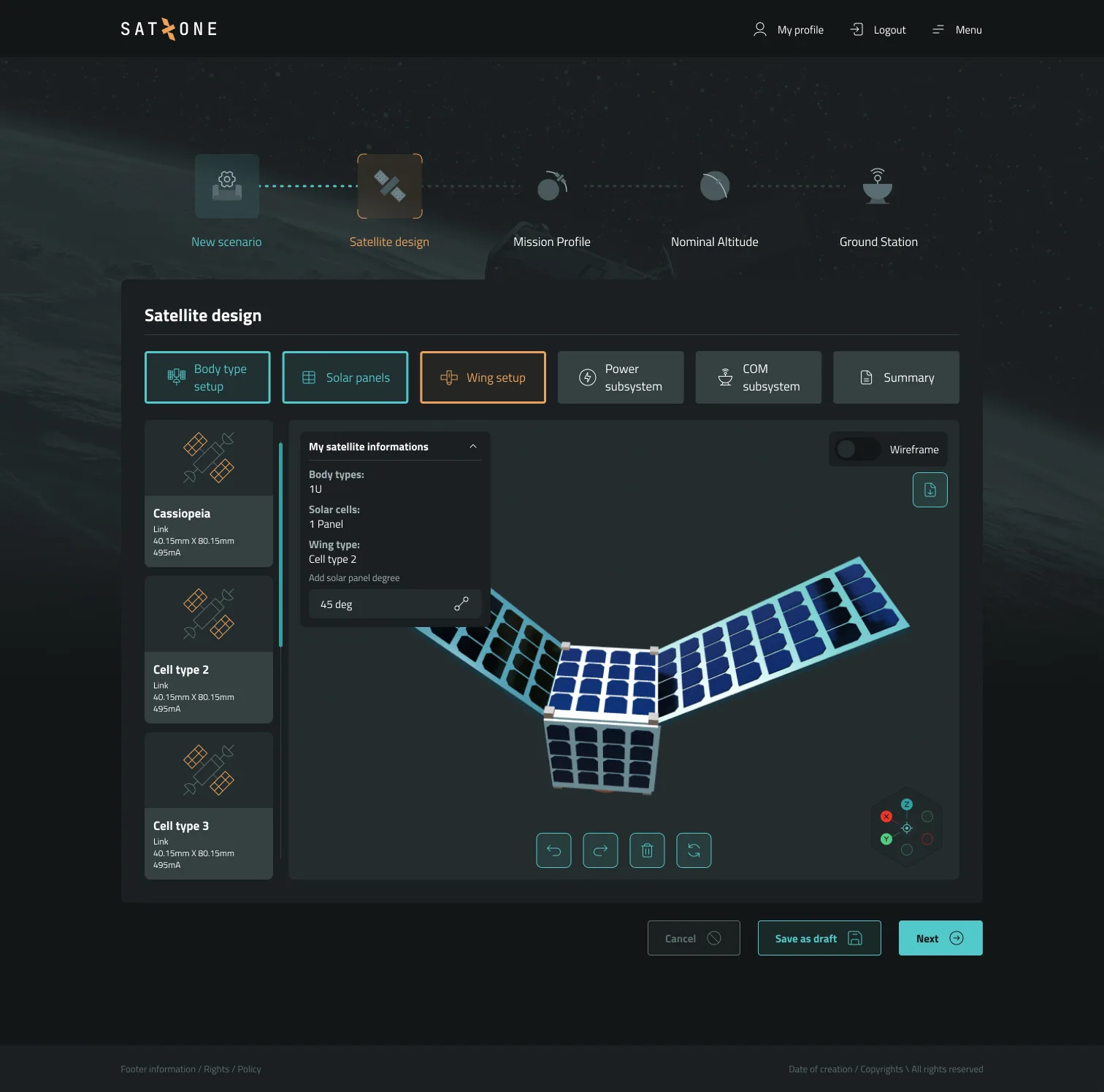
SatZone helps CubeSat and SmallSat teams model mission scenarios, evaluate orbit-dependent constraints, and compare communications, power, radiation, and lifetime trade-offs in one workflow.
Built by space engineers with ESA-related project experience and practical mission analysis background.
The Challenges
Small satellite teams need to make architecture decisions before every detail is finalized. Orbit selection affects communication windows, power generation, radiation exposure, orbital lifetime, and mission feasibility.
These analyses are often performed in separate spreadsheets, scripts, and specialist tools. That makes iteration slow, assumptions hard to track, and scenario comparison difficult.
SatZone helps teams bring these early mission analyses into one structured workflow.
Orbit, communications, radiation, lifetime, and data budgets are often handled in separate tools.
Changing one assumption can require manual updates across multiple calculations.
Teams need to compare mission options clearly before design decisions become locked.
What SatZone does
SatZone supports early mission design by helping teams define mission scenarios, run engineering analyses, and compare results across different assumptions. It is designed for fast iteration during concept development, feasibility studies, proposals, and early design phases.
Define orbit inputs, mission duration, spacecraft assumptions, ground stations, and analysis settings.
Evaluate orbit propagation, RF/data link performance, radiation exposure, and other mission constraints.
Understand how changes in orbit, communication strategy, or mission assumptions affect feasibility and margins.
Workflow
Set mission objectives, spacecraft assumptions, payload needs, and the questions the analysis must answer.
Use TLE or Keplerian elements to define candidate mission scenarios and propagation settings.
Add spacecraft, ground station, communication, and operational assumptions.
Evaluate orbit, link budget, radiation, power-related constraints, and other mission feasibility drivers.
See how orbit choice, communication strategy, and mission assumptions affect margins and feasibility.
Prepare results for proposals, reviews, internal trade studies, and technical discussions.
Capabilities
Define and evaluate mission scenarios using orbit inputs and configurable simulation settings.
Analyze communication feasibility, link margins, data volume, and downlink opportunities.
Connect orbit-dependent conditions with spacecraft-level assumptions for early feasibility assessment.
Estimate orbit-specific radiation exposure and support early radiation-related mission assessment.
Generate outputs that help teams compare scenarios and communicate engineering assumptions.
Use cases
Compare mission assumptions early, while orbit, payload, communications, and lifetime choices are still flexible.
Use a shared workflow to communicate feasibility drivers, margins, and scenario assumptions.
Move faster through concept studies, proposal preparation, and early customer or partner discussions.
Structure mission analysis work for student teams, research missions, and externally reviewed activities.
Startup package
We offer a focused mission-analysis package for teams that need SatZone access, onboarding, and direct support during a defined activity.
Technical credibility
SatZone is shaped by ESA-related activities, satellite mission analysis work, RF and link budget studies, and radiation assessment workflows.
The emphasis is on transparent assumptions, fast iteration, and outputs that help teams communicate trade-offs during early spacecraft design.
Contact
Tell us about your mission concept, orbit assumptions, and analysis needs. We can show how SatZone supports scenario comparison and early mission feasibility work.
info@ephemersys.comOnline scheduling
Choose an available time for a SatZone, Sector Tool, or mission analysis discussion.