Geometry matters
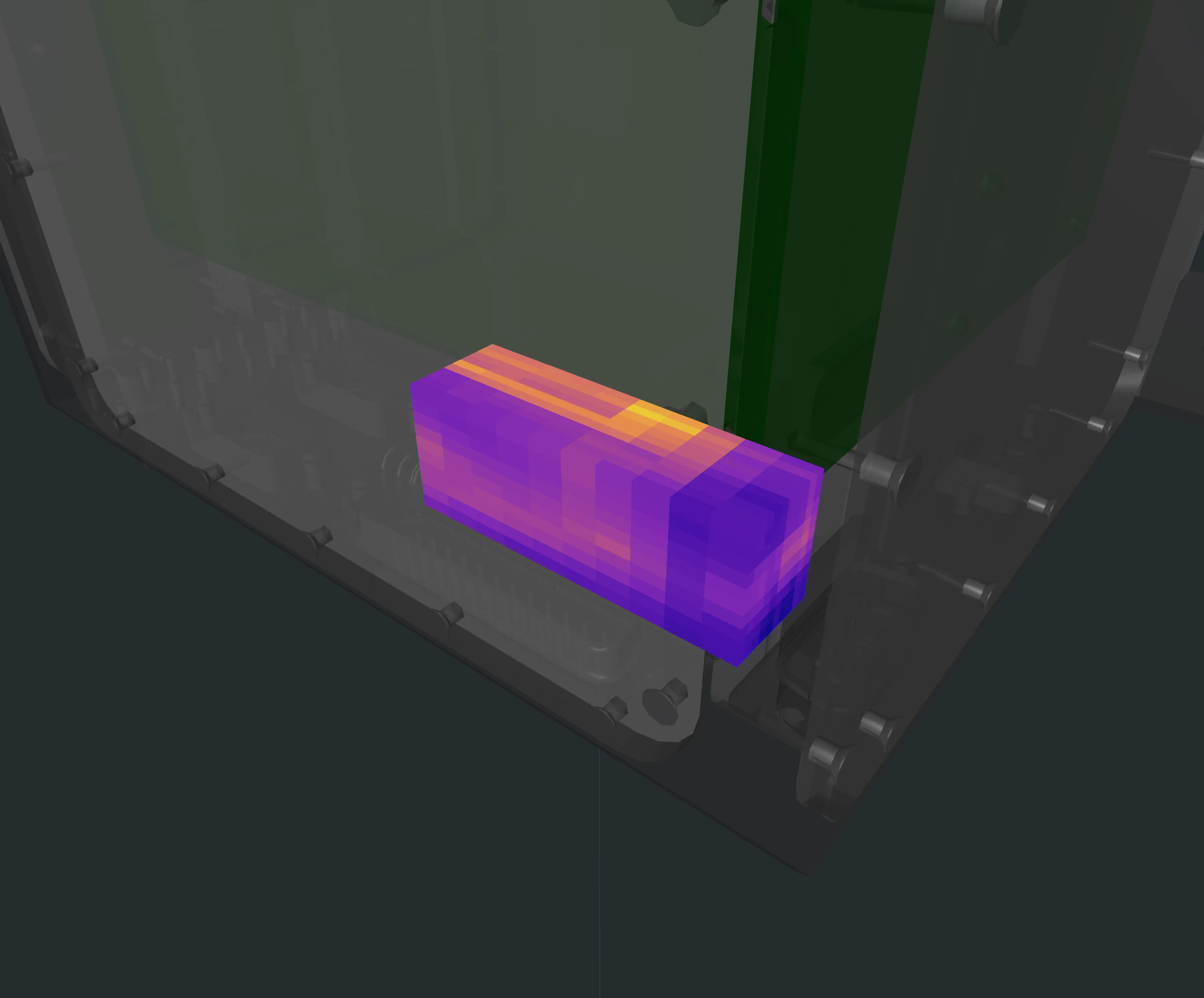
Radiation exposure at component level depends strongly on surrounding structure, shielding paths, and local material distribution.

Sector Tool
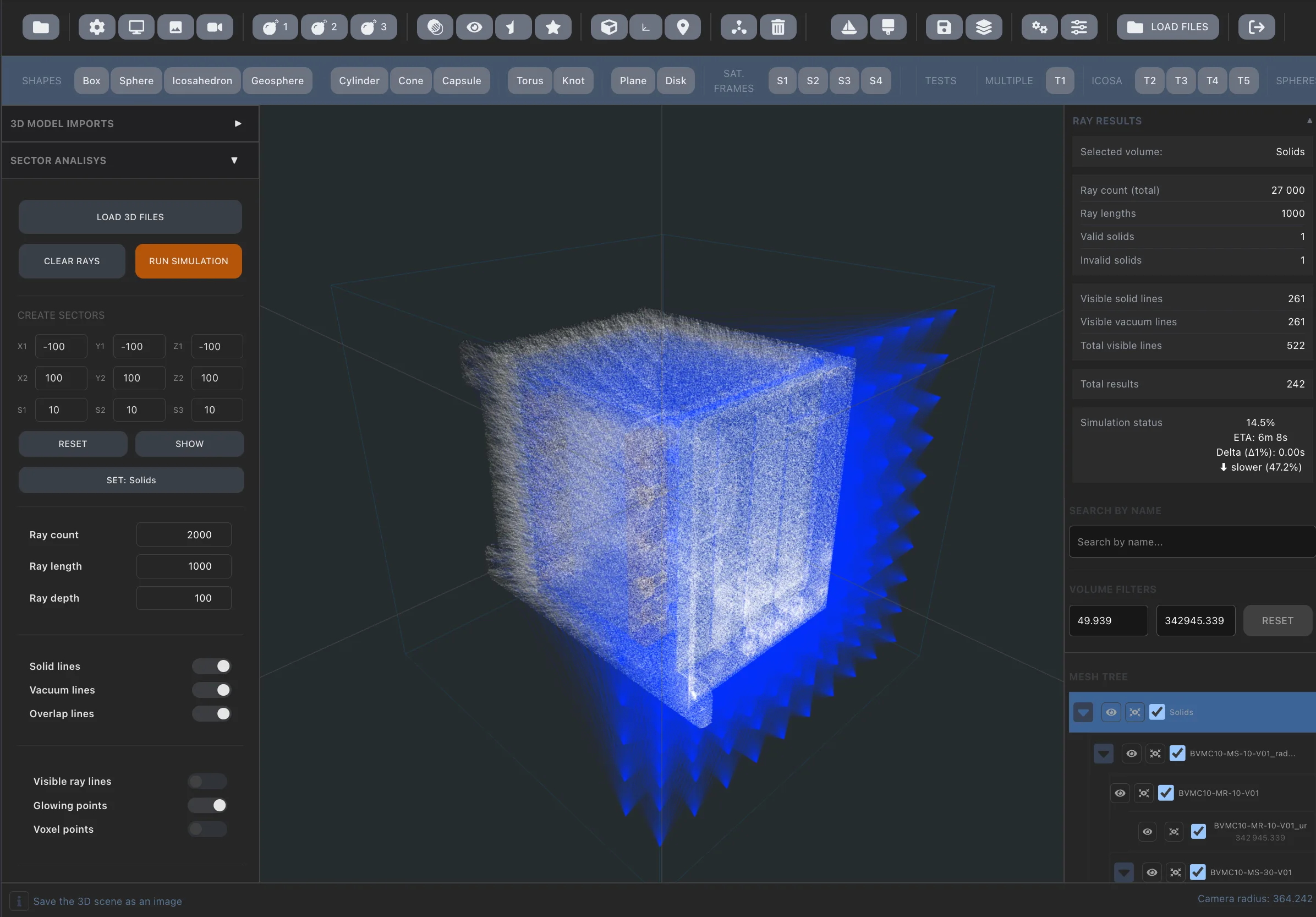
The Sector Tool helps spacecraft teams evaluate geometry-driven shielding, component exposure, and radiation risks using sector-based analysis workflows for TID, TNID, and SEE assessment support.
Built on subsystem-level Lunar and Venus radiation analysis experience, with development supported through an ESA RPA activity.
The Challenges
Radiation analysis is not only about the external environment. For spacecraft design teams, the critical question is how radiation reaches sensitive components through the actual spacecraft geometry.
Shielding thickness, material distribution, component placement, and mission environment all affect TID, TNID, and SEE-related risks. When these factors are evaluated too late, radiation mitigation can become expensive, mass-heavy, or difficult to integrate.
The Sector Tool helps teams investigate these effects earlier by connecting spacecraft geometry with sector-based shielding and radiation assessment workflows.
Radiation exposure at component level depends strongly on surrounding structure, shielding paths, and local material distribution.
If radiation risk is discovered too late, design changes may require additional shielding mass, component relocation, or mechanical redesign.
Radiation analysis used in design reviews must be based on clear inputs, visible assumptions, and review-ready outputs.
What the tool does
The Sector Tool supports spacecraft teams in analyzing how geometry and shielding affect radiation exposure at component or subsystem level. It enables engineers to evaluate shielding sectors, inspect material distribution, and support radiation assessments such as TID, TNID, and SEE-related analysis.
Import or define spacecraft geometry and evaluate how shielding varies around sensitive locations.
Support TID, TNID, and SEE-related workflows using sector-based shielding information.
Compare shielding options, component placement, and geometry changes before design choices become locked.
Workflow
Start from the spacecraft or subsystem geometry relevant to the radiation analysis.
Define material information and shielding assumptions needed for sector-based evaluation.
Choose the sensitive components, boards, or locations where radiation exposure should be assessed.
Evaluate directional shielding distributions around the selected location.
Use sector-based shielding information to support TID, TNID, and SEE-related assessment workflows.
Investigate how design changes, shielding strategies, or component placement affect the result.
Produce figures, tables, assumptions, and summaries that can support engineering discussions and reviews.
Capabilities
Use cases
Especially relevant for demanding radiation environments such as Lunar, interplanetary, and planetary mission scenarios.
Understand how component location affects shielding and radiation exposure.
Compare shielding approaches before adding unnecessary mass or redesigning mechanical layouts.
Prepare analysis outputs that support PDR/CDR-level engineering discussions.
Evaluate how different mission environments affect radiation exposure and mitigation needs.
Technical credibility
Our team has contributed to subsystem-level radiation analysis for Lunar and Venus mission studies, including Total Ionizing Dose, Total Non-Ionizing Dose, and Single Event Effects assessments supporting PDR- and CDR-level engineering reviews.
The Sector Tool is shaped by that experience: transparent assumptions, geometry-aware analysis, traceable outputs, and a focus on decisions that matter during spacecraft design.
Contact
Tell us about your mission environment, spacecraft geometry, and radiation analysis needs. We can show how the Sector Tool supports geometry-aware shielding and component-level radiation assessment workflows.
info@ephemersys.comOnline scheduling
Choose an available time for a SatZone, Sector Tool, or mission analysis discussion.